PIR Motion Sensor Alarm Manufacturer
Each detector triggers on heat in motion: a passive-infrared element watches a warm body cross its detection cone and fires the alarm, while pet-immunity and ambient-light rejection keep it quiet when a cat walks by or the afternoon sun sweeps the wall. For you that means fewer false-alarm returns and a motion sensor your buyers trust under their own label.
One section decides this order ahead of the rest, the false-alarm engineering, so it is placed early, right after the sensing mechanism.
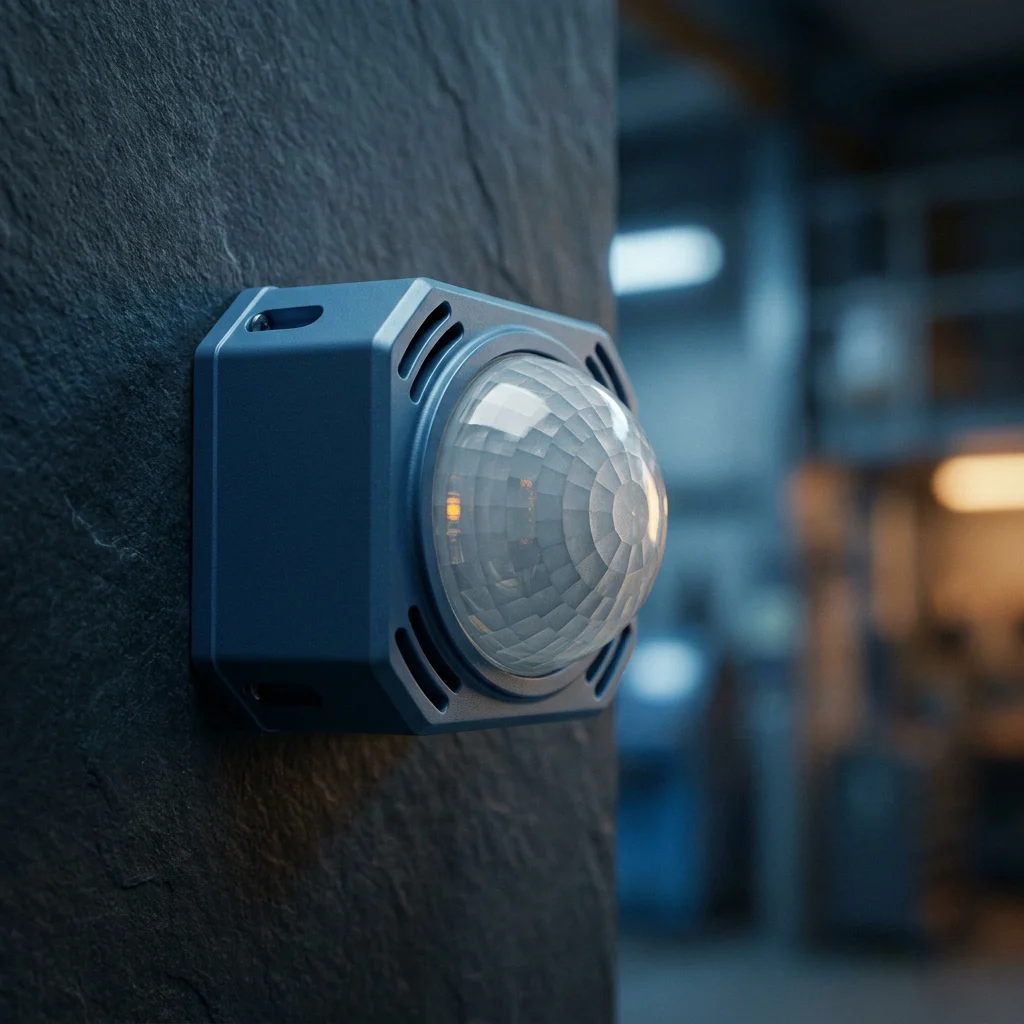
SafeTech Factory is a PIR motion sensor alarm manufacturer building passive-infrared motion detectors for buyers who stock, resell, or private-label home-security sensors. Every unit is built around a single event: a warm body moving into the detection field, read the instant it crosses the infrared zones and held silent when the mover is a pet, a sunlit wall, or a warm draught. This sheet covers how the passive-infrared element reads heat in motion, the false-alarm engineering that keeps it quiet when it should be, the coverage and mounting that decide which body a room needs, the Tuya and Zigbee platform fit with arm and disarm scheduling, and the private-label economics of an OEM or wholesale build.
PIR Motion Sensor Models: Wall, Corner, Ceiling and Outdoor
The mounting position decides the body and the hub decides the radio, so the range is laid out by where the sensor sits and what it talks to.
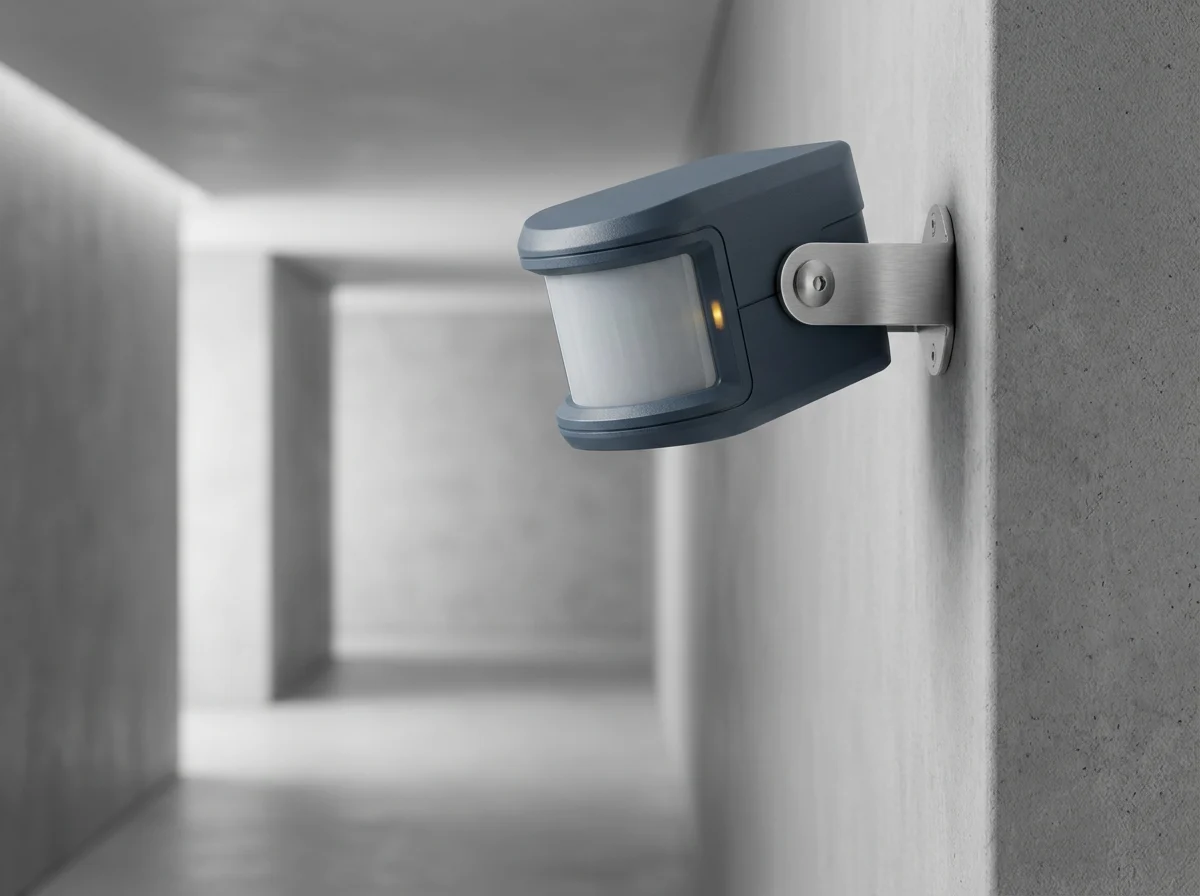
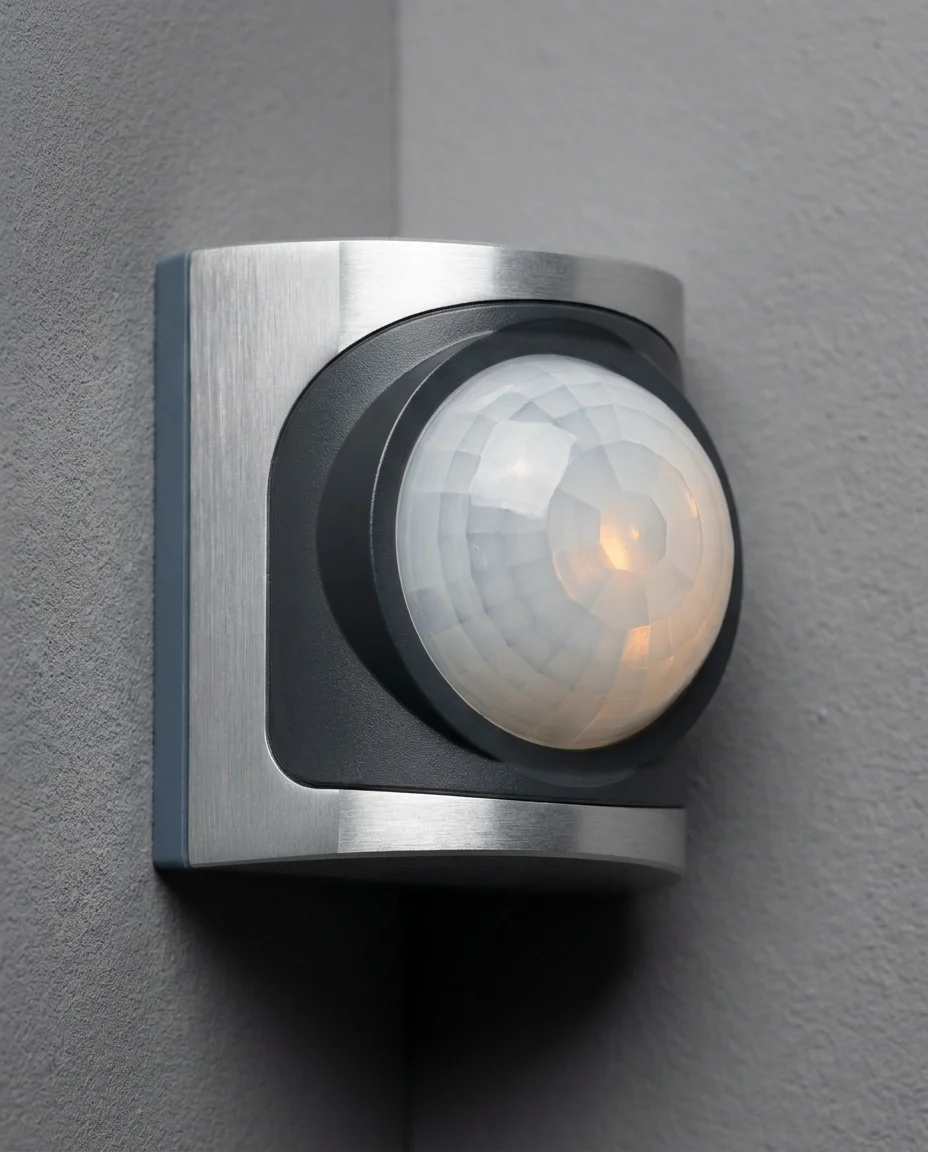
A compact body reading a ~110° horizontal fan out to roughly 8 m, dropped on a swivel bracket so its cone aims down a hallway or across a room from a corner — the volume unit.
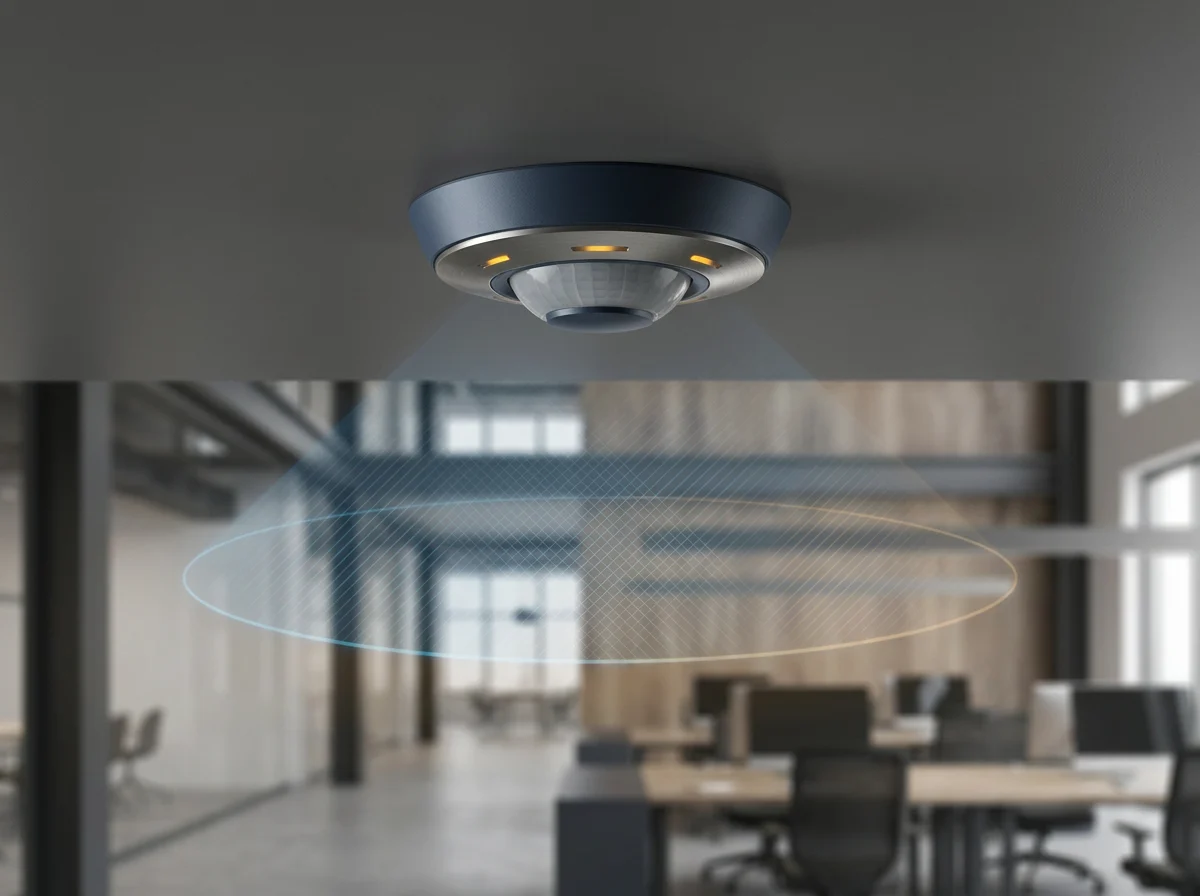
A full-circle field about 6 m across at a 2.4 m mount — the body for an open-plan room or a landing where a wall unit would leave a blind arc behind it.
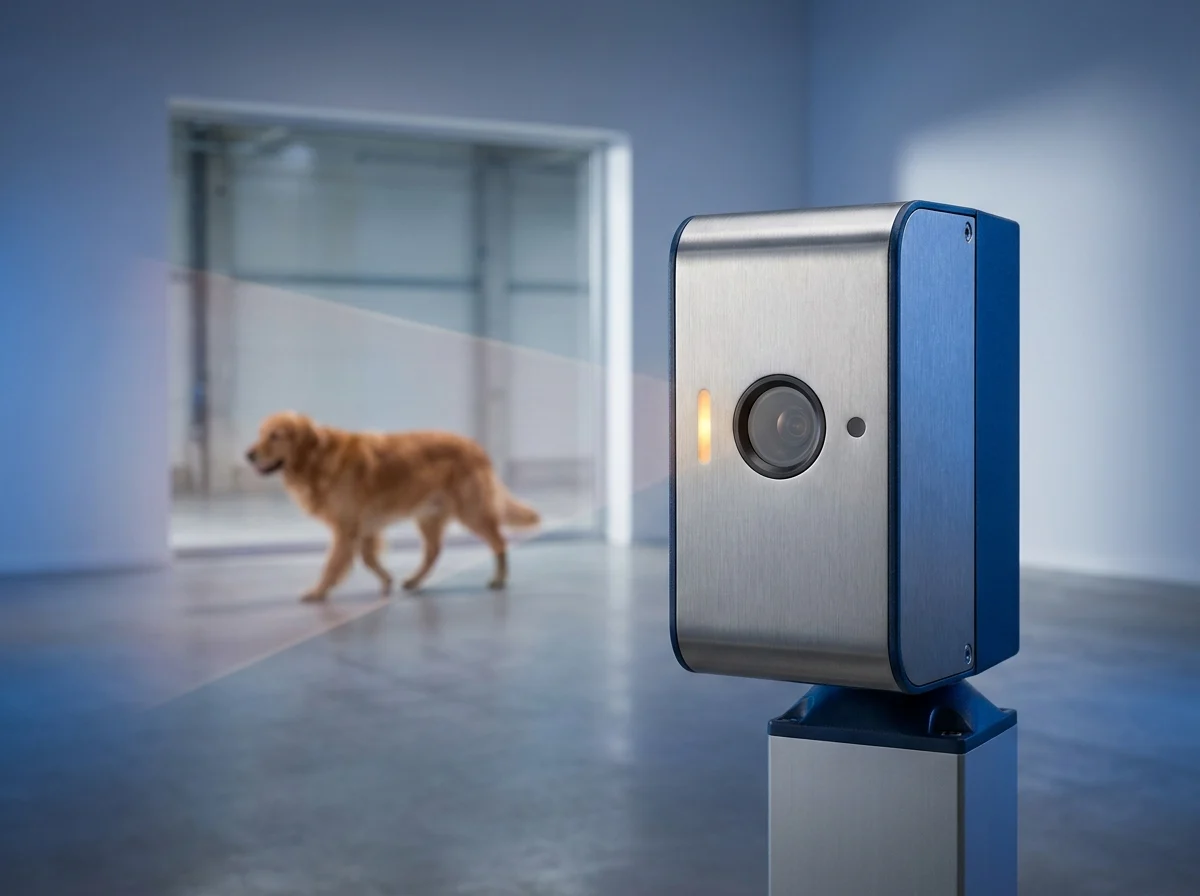
A masked lens that ignores animals up to about 25 kg, for homes and shops where a standard sensor would fire on a dog crossing the floor.
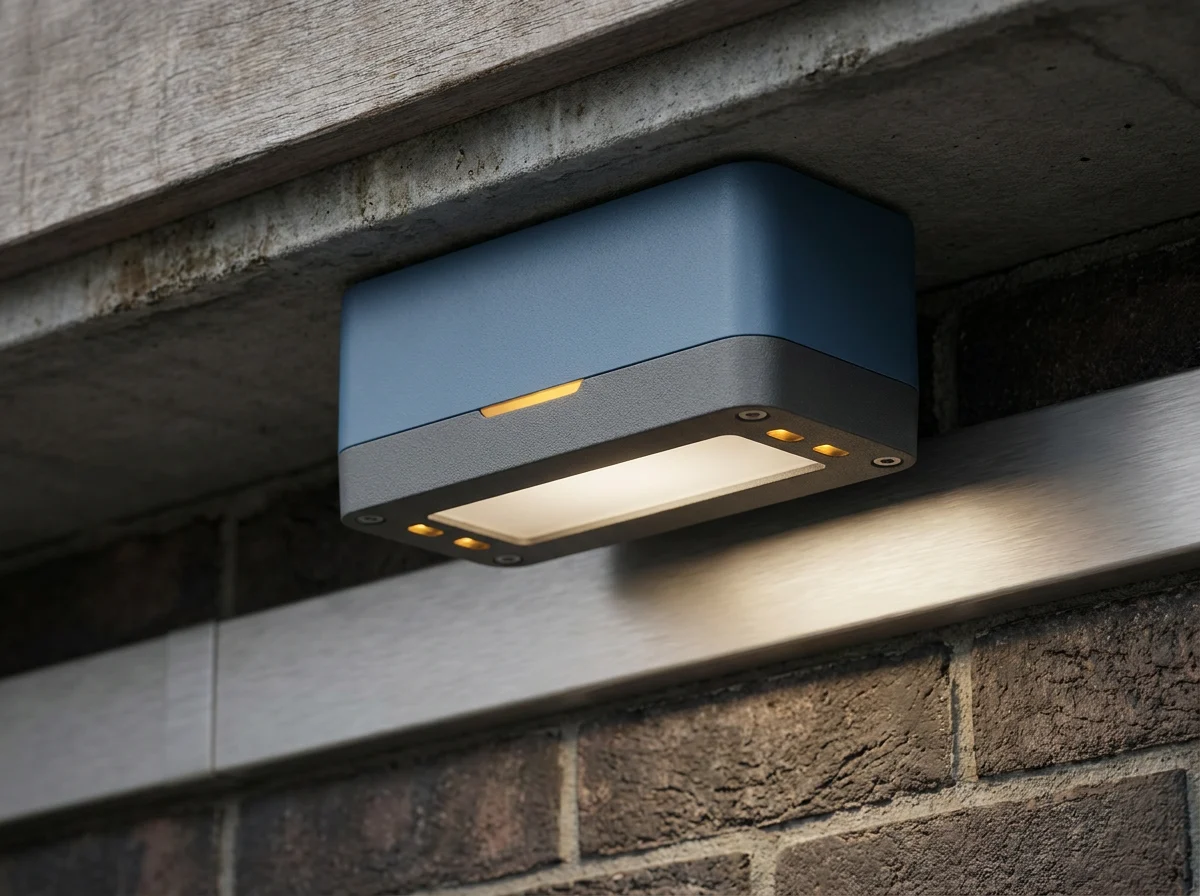
The same element in a weather-resistant IP65 housing for a porch, garage or covered entry.
Because every body and radio is assembled in the same plant, a smart motion sensor alarm supplier can hold its whole motion-alarm shelf under one supply agreement. Related home-security sensors: covering contact or leak points in the same order? The door & window sensor and water-leak detector each have their own sheet; this page stays on motion, and no contact or leak ranking is duplicated here.
How a Passive-Infrared Element Reads Heat in Motion
The mechanism that tells a moving person apart from a still, warm room.
- The element reads heat, emitting nothingA passive-infrared sensor emits nothing of its own; it reads the infrared heat that every warm body already gives off.
- Two elements cancel a steady heat levelBehind the lens sit two pyroelectric elements wired against each other, so a uniform, unchanging heat level — a sun-warmed wall or a radiator that fills both elements equally — cancels out and reads as nothing.
- The Fresnel lens splits the field into beamsA multi-zone Fresnel lens splits the field of view into a fan of separate detection beams stacked across the cone; when a warm body moves, it passes out of one beam and into the next.
- The zone-to-zone swing is the triggerEach crossing swings the balance between the two elements. The sensor fires on the CHANGE from zone to zone as a body travels through the field, which is why it answers movement and stays blind to a heat source that simply sits there. Range and sensitivity are adjustable through the lens position and a firmware setting.
False-Alarm Engineering: Pet-Immunity, Ambient-Light Immunity and Re-Trigger Hold
The reason a jumpy sensor comes back as a return, and how each nuisance trigger is engineered out one at a time.
A floor-level heat mass never rises into an active zone, so the alarm never fires on the family cat or dog.
A full-body heat signature rises into the active beams, ignites the zones in sequence and fires. Ambient white-light sweep and whole-room thermal draught are both rejected by the IR filter and dual-element cancel.
The pet-immune variant masks the lowest zones of the Fresnel lens, so a heat mass travelling along the floor never rises into an active beam. It is rated to ignore pets up to about 25 kg at the stated mount height. Because the immunity is geometric, mount height and downward angle set the threshold, and every quote states the height the rating is measured at.
The dual-element differential discards a steady heat level, and an optical filter over the lens passes only the infrared band a human body radiates while blocking visible light. So sunlight moving across a wall, headlights swinging through a window, or a lamp switching on does not read as a body; only infrared moving through the zones does.
A slow, whole-room temperature change from an HVAC vent or a warm draught shifts both elements together and cancels, while only a fast, localised beam-to-beam change from a person crossing survives, so a heating cycle does not chatter the alarm.
After each event the sensor holds a block window that is adjustable from roughly 5 seconds to 120 seconds. A buyer tunes it toward fast re-arming for a busy entrance or toward a longer quiet window that both stops a walked-through room from spamming the phone and saves battery.
Together these four are the difference between a motion alarm an end user keeps armed and one they switch off after a week and then return.
Detection Range, Coverage Angle and Where Each Body Mounts
Range and angle decide the space a sensor can hold, so match the cone to the room before the radio.
Battery Life and Low-Power Design on a CR123A Cell
A sensor that sleeps between events, so one cell runs through years of ordinary use.
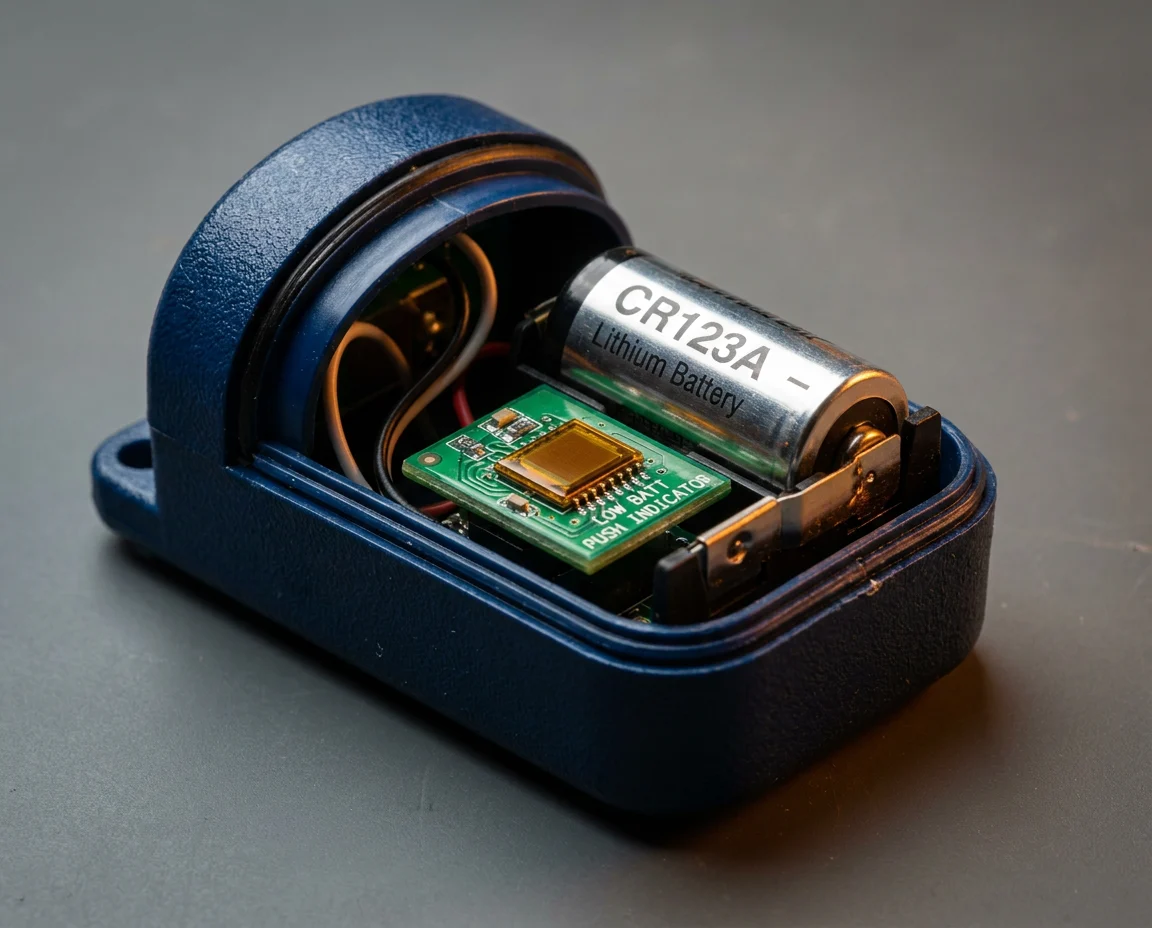
on a single CR123A lithium cell (Zigbee / RF)
Between events the detector keeps the pyroelectric front-end watching and the radio asleep, waking it only when a beam-crossing trips the trigger, which holds average current low even though the element never stops reading. On a single CR123A lithium cell a Zigbee or 433 MHz RF model holds up to about 24 months of standby, a higher-capacity SKU about 36, and a 2×AAA variant is offered where a buyer prefers a common cell. WiFi models keep a heavier link alive and run in the 6 to 10 month range, so where battery life leads the spec we quote the Zigbee or RF version and say so on the offer.
The re-trigger hold set in the previous section feeds directly into this: a longer block window means fewer wake-and-transmit cycles, so a buyer who trades a little responsiveness buys back months of standby. Each model tracks its own cell voltage and fires a low-battery push while charge is still in hand, converting a silent death into a diarised swap. A cell change is a front-of-housing job needing no tools.
Smart-Home Integration, Arm/Disarm Scheduling and a Custom OEM App
A motion event only matters when the system is armed, so the scheduling and the app are built around that state.
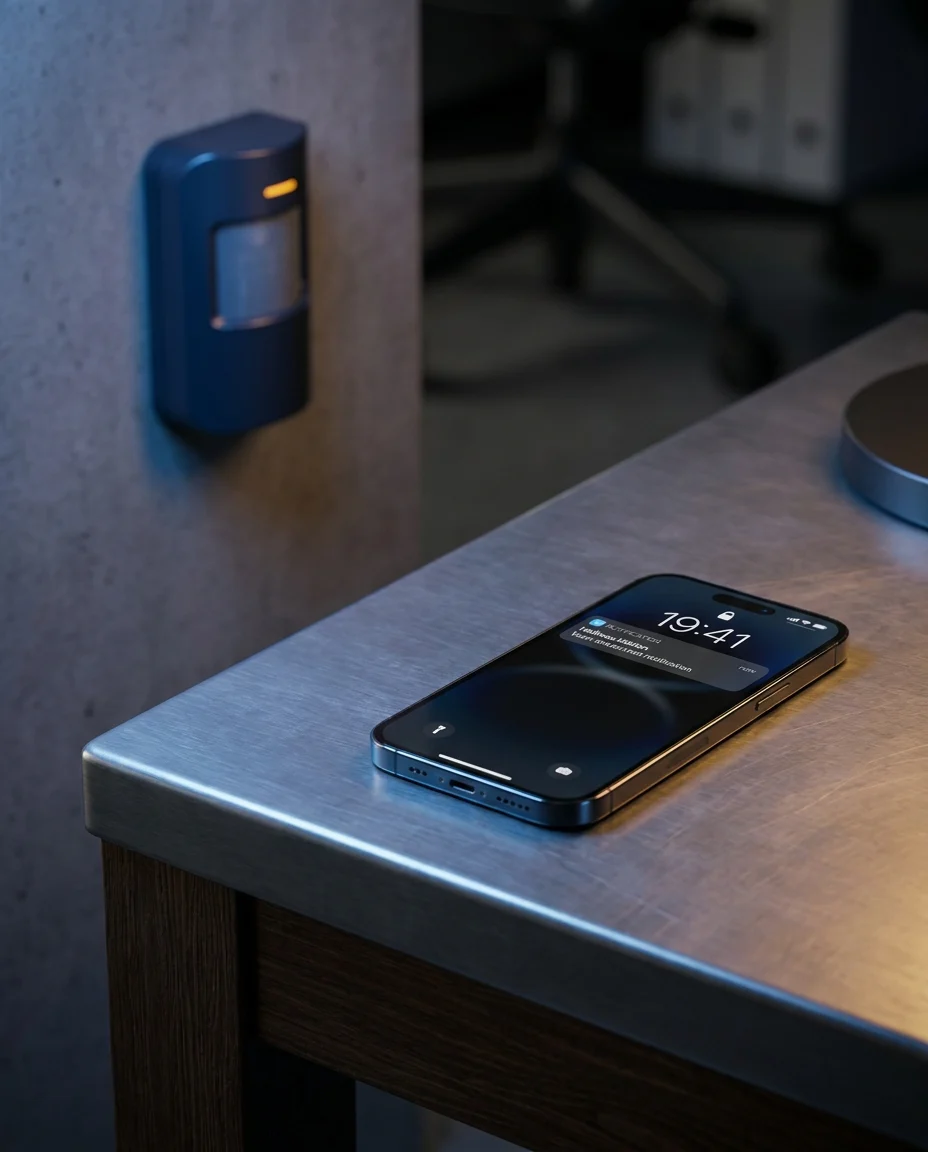
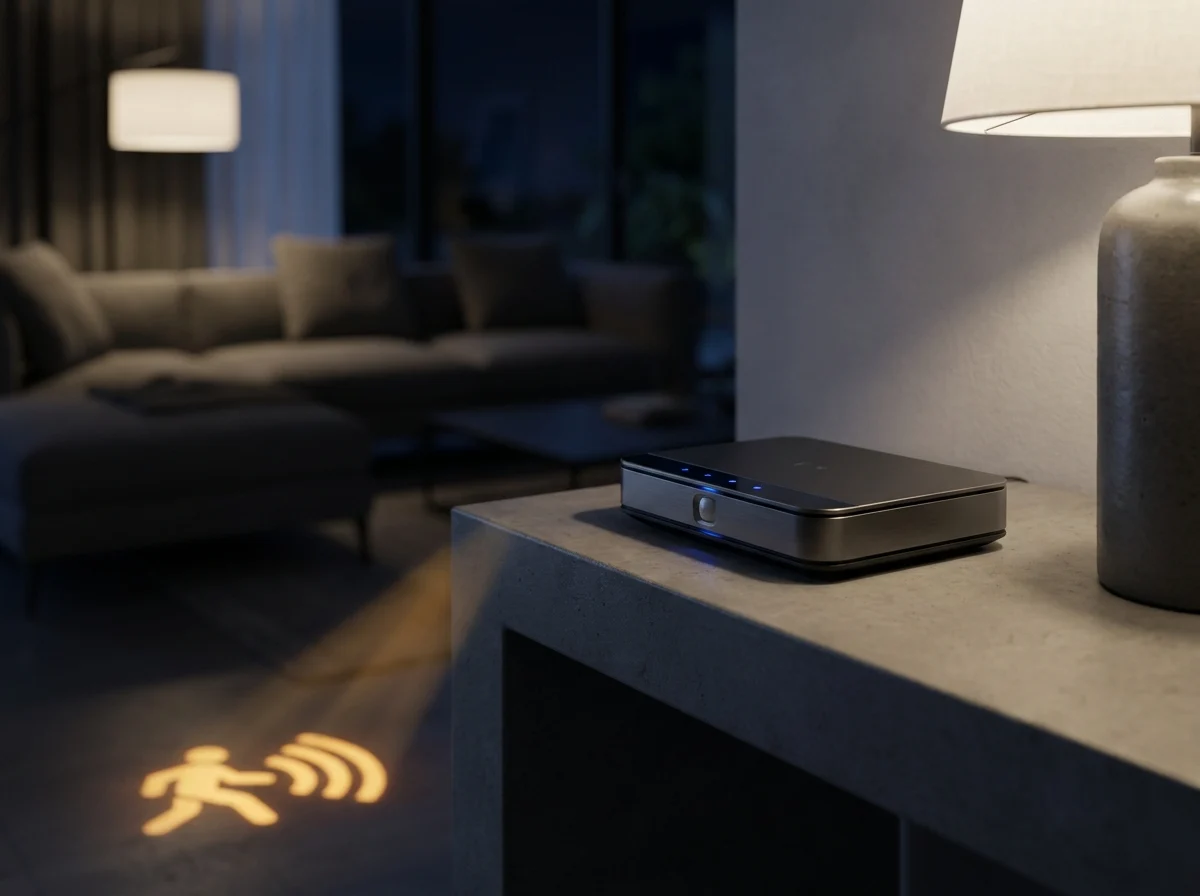
Each detector joins Tuya / Smart Life over Zigbee 3.0, 2.4 GHz WiFi or 433 MHz RF, answers to Amazon Alexa and Google Home for voice and routines, and opens an API and SDK for a buyer whose platform is their own. A motion event is timestamped and pushed the instant it fires, so an owner sees "Hallway motion 2:14 AM" as it happens.
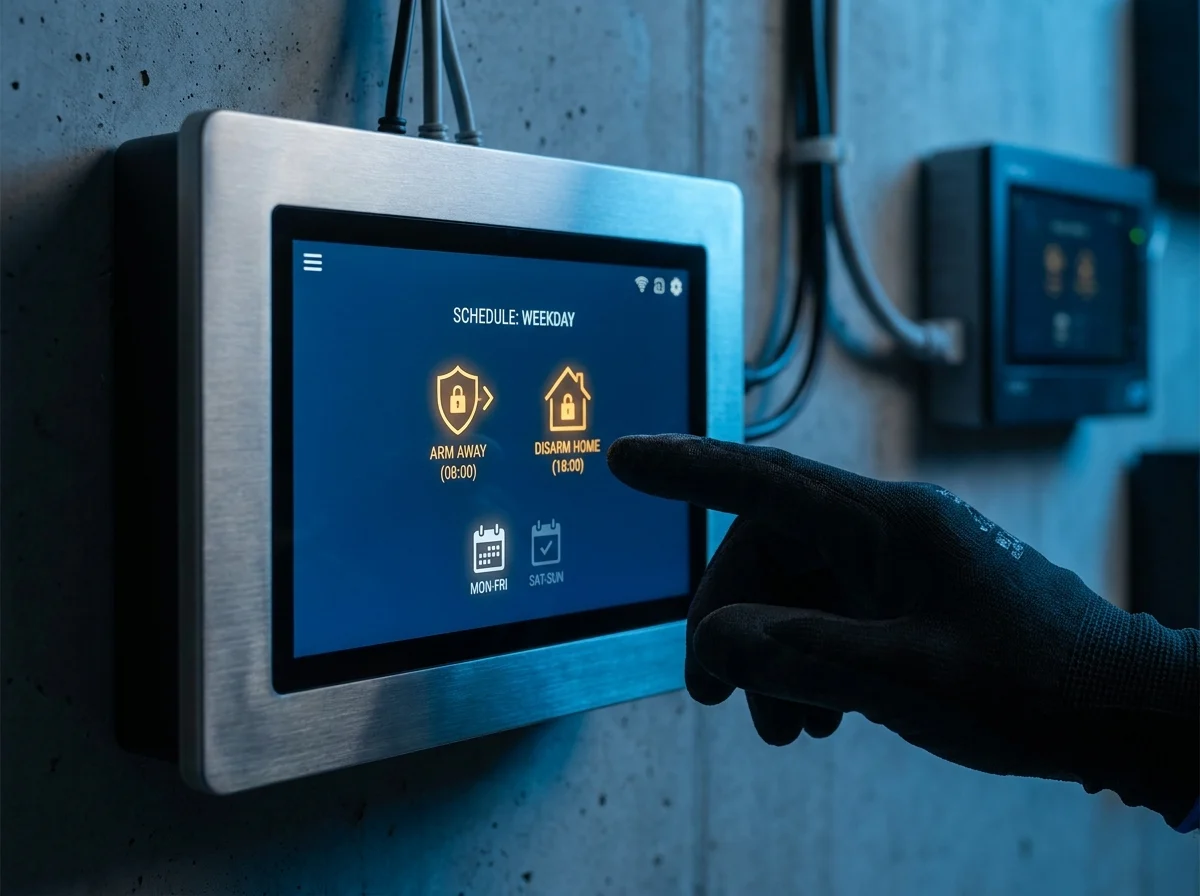
What makes a motion sensor sellable into security is the armed state: arm and disarm on a schedule or by home / away mode, so the family crossing the hall at dinner raises nothing while the same movement at 2 a.m. armed sends the alert and can run a scene — switch on an entry light, start a camera clip, or sound a hub siren. Tamper protection rides the same channel: a switch reports the housing being opened or pulled off its bracket, so a unit an intruder tries to cover raises a state event instead of going dark. Low-battery and tamper states travel the same push path.
Your branding, from the app skin to the developer identity
For brand owners the firmware ships under a custom OEM app whose home screen is the motion and arm / disarm activity feed under your name. Because it is a full first-party app, it lists under the buyer's own App Store and Google Play developer identity, so the end customer stays inside the buyer's brand and never passes through our accounts.
PIR Motion Sensor Specifications
The full sheet in one place; values are per body where they differ.
| Sensing | Passive-infrared dual-element (pyroelectric), heat-in-motion across the field |
|---|---|
| Lens | Multi-zone Fresnel zone lens; pet-immune masked variant available |
| Detection range | Wall / corner up to ~8 m · ceiling 360° ~6 m diameter @ 2.4 m · outdoor up to ~12 m |
| Coverage angle | ~110° horizontal fan (wall / corner) · 360° (ceiling) |
| Re-trigger (hold) time | Adjustable ~5 s to ~120 s (re-trigger) |
| Pet-immunity | Ignores animals up to ~25 kg at rated mount height (pet-immune variant) |
| Sensitivity / range | Adjustable (lens position + firmware) |
| Warm-up | ~30–60 s stabilisation after power-on |
| Protocols | Zigbee 3.0 · WiFi 2.4 GHz · 433 MHz RF · Tuya / Smart Life |
| Wireless range | ~30 m indoor through walls · ~80–100 m open line of sight (Zigbee / RF) |
| Battery / standby | CR123A up to ~24 months, higher-capacity SKU ~36 (Zigbee / RF) · 2×AAA variant · WiFi 6–10 months |
| Low-battery push | Yes, before cell depletes |
| Tamper | Switch reports cover / removal from bracket |
| Mount | Wall / corner / ceiling; screw or 3M adhesive; swivel bracket |
| Mount height | Wall / corner 2.0–2.4 m · ceiling 2.4–3.6 m |
| Ingress | Indoor IP20 standard · outdoor variant IP65 weather-resistant |
| Operating temperature | -10 °C to +50 °C indoor (outdoor variant wider) |
| Dimensions / weight | Mini ~55 × 55 × 40 mm, ~50 g · ceiling ~Ø100 mm |
| Certification | CE · RoHS · FCC (RF/electronic) · ISO 9001 (factory QMS) — reports on request (AQL 2.5) |
OEM / ODM Scope and MOQ Tiers
What you can change on a motion sensor, and the order size each level of customisation starts at.
- Logo, housing colour & finishYour brand from the carton to the wall — print area, colour and packaging.
- Lens cap & opticsPet-immune-versus-standard optics and the lens cap your shelf needs.
- Radio & re-trigger defaultBuild the range on Zigbee, WiFi or 433 MHz RF; set the default hold time.
- App skin on the Tuya buildPairing and motion notifications appear under your name — a full OEM home security motion sensors programme.
See the Cone Trip Before You Buy
Ask for a functional sample and walk-test the cone yourself — get a working unit you can step through and watch trip on the move and stay silent on a still room, then move to a quote once you have seen it fire.
Request SamplesCE, RoHS and FCC Certification
The electronic and RF set these buyers list against, with an outdoor weather rating as a secondary note.
Three approvals decide where a wireless motion sensor is allowed to sell, and the range holds all three. A CE mark is the gate into the European Economic Area, the first document a distributor there asks to see. FCC is the United States clearance for radio emissions that a WiFi, Zigbee or 433 MHz device cannot list without. RoHS governs the hazardous-substance content of the electronics and now lands as its own line on many purchase orders. Standing alongside those three product approvals, and doing a different job, is ISO 9001: it certifies the factory's quality-management system rather than any one device, so a procurement team reads it as proof that the process building the sensor is audited and repeatable. For the outdoor body an IP65 weather rating is added as a durability credential, held below the electronic set because ingress protection is not what a motion sensor is judged on. Bluetooth BQB and the smoke-alarm fire-safety approvals stay outside this product's scope.
CE Marking
Conformity for the European market — what a distributor's compliance team asks for first.
RoHS
Restricts hazardous substances in the electronics — increasingly a purchase-order requirement.
FCC
US radio and electronic emissions rules — required before any WiFi, Zigbee or 433 MHz product lists.
ISO 9001
Quality-management system standing behind the whole build process, not one device.
IP65
Weather resistance on the outdoor body, held below the electronic set.
The matching declarations ride with every shipment, and the certificates and test reports come out on request during sourcing so a compliance team can verify them before an order is placed — with registration numbers handed over alongside those documents rather than posted on a page. How every unit is inspected and tested is documented on our quality control & certifications page.
Why Buyers Source Their Motion Sensors From Our Factory
When the quote comes from the plant that assembles the sensor rather than a trading desk sitting in front of it, a change to the lens, the re-trigger default or the app skin reaches the line directly instead of passing down a chain. Behind the order sits a monthly capacity of 500,000 pcs and a 20+ engineer R&D team spanning circuit, structure and firmware, close enough to the request to turn it into working firmware.
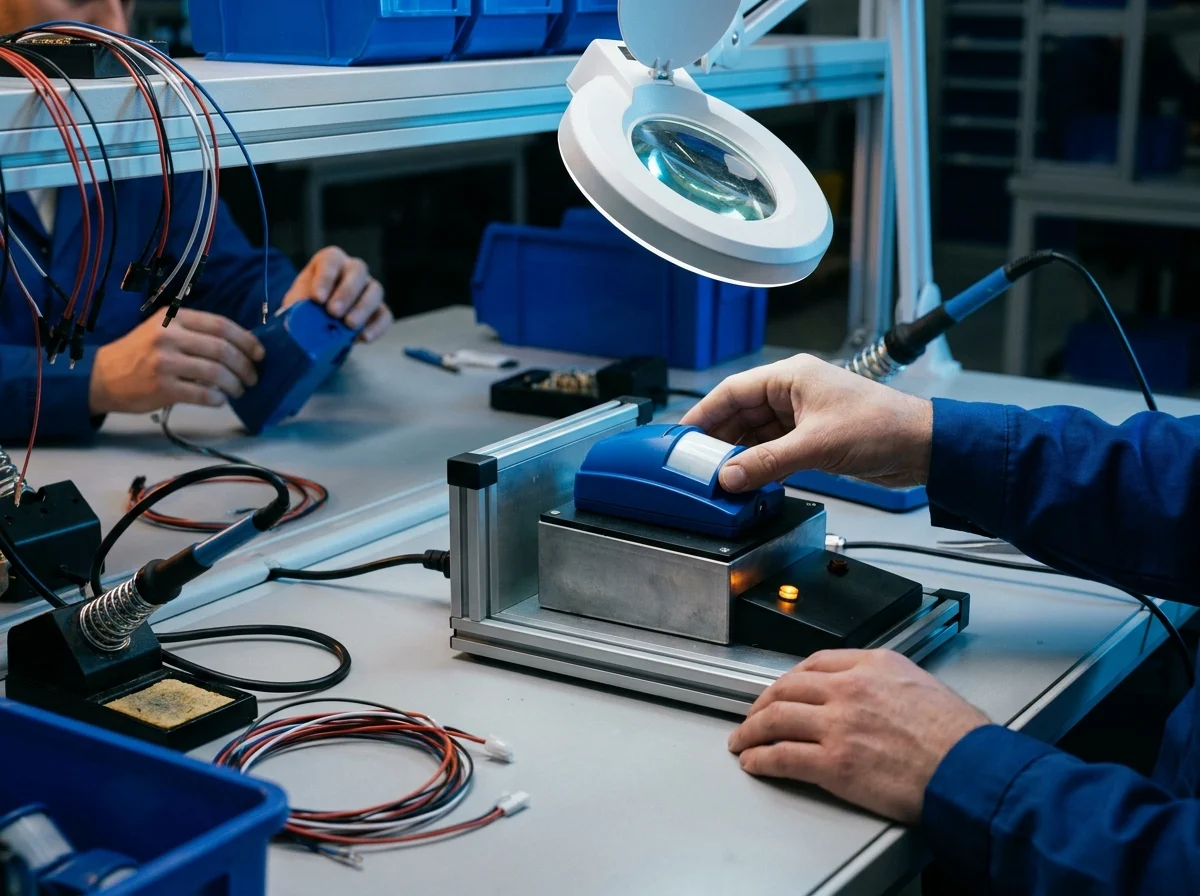
On a wireless product the testing is built into the run: each unit is powered up and walk-tested, a technician stepping through the cone to confirm it trips on the move and stays silent on a still room, then a pre-shipment check at AQL 2.5 General Level II and a chain of 20+ line checkpoints hold the pass rate that keeps delivery at 98% on time. A record of building safety electronics since 2009, now 15+ years and 60+ countries deep, is what puts repeat orders at roughly 70% of volume. The wider company history sits on the About page; what matters here is only that the sensor is quoted, built and tested with no trading layer between the offer and the line.


Who Sources These PIR Motion Sensors
Sorted by where a motion alarm is actually deployed, because the room decides the body and the armed routine before the sales channel does.
Pet-owning homes
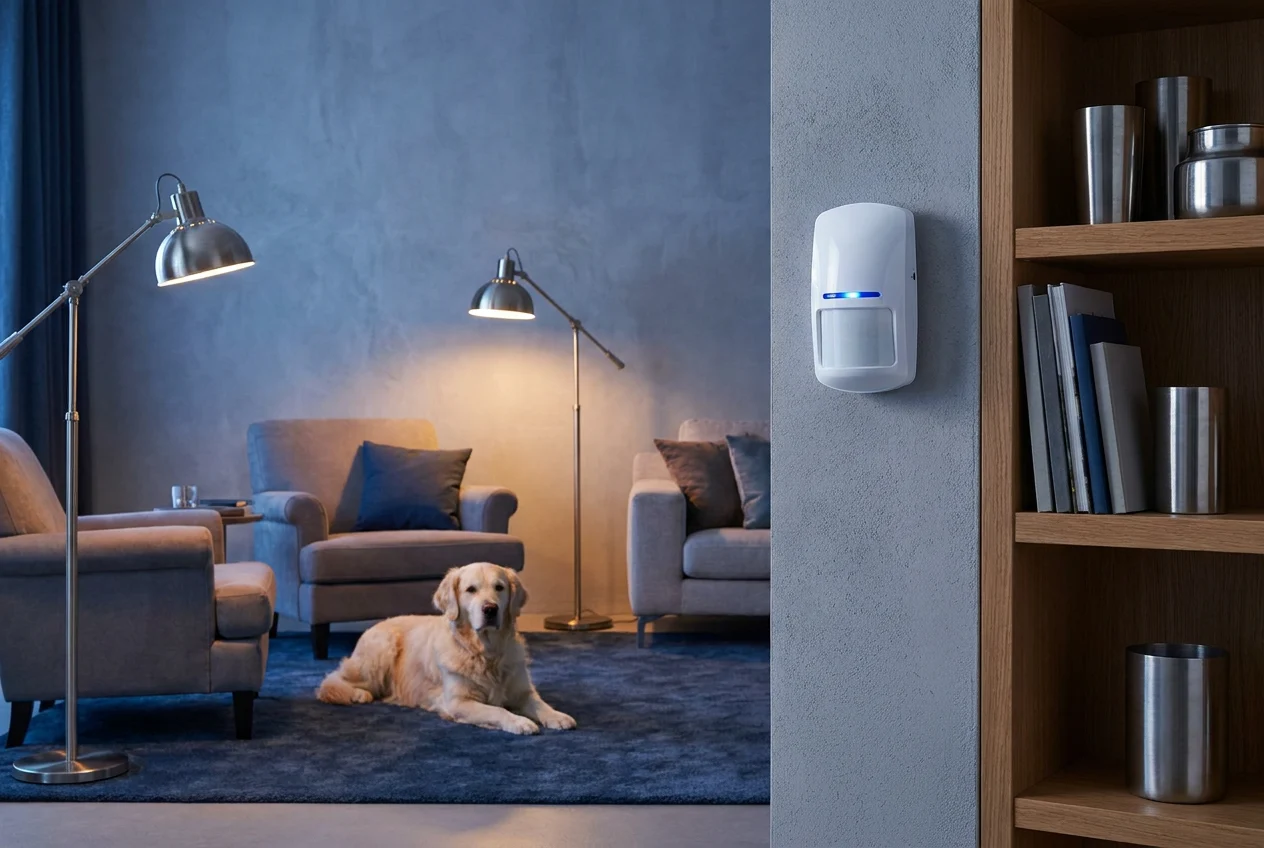
The one thing that kills a residential motion sensor is an alarm on the family dog, so the pet-immune wall and corner build is the unit — masked above a floor-level animal and armed on a home / away schedule.
Pet-immune build so the false-trigger review never lands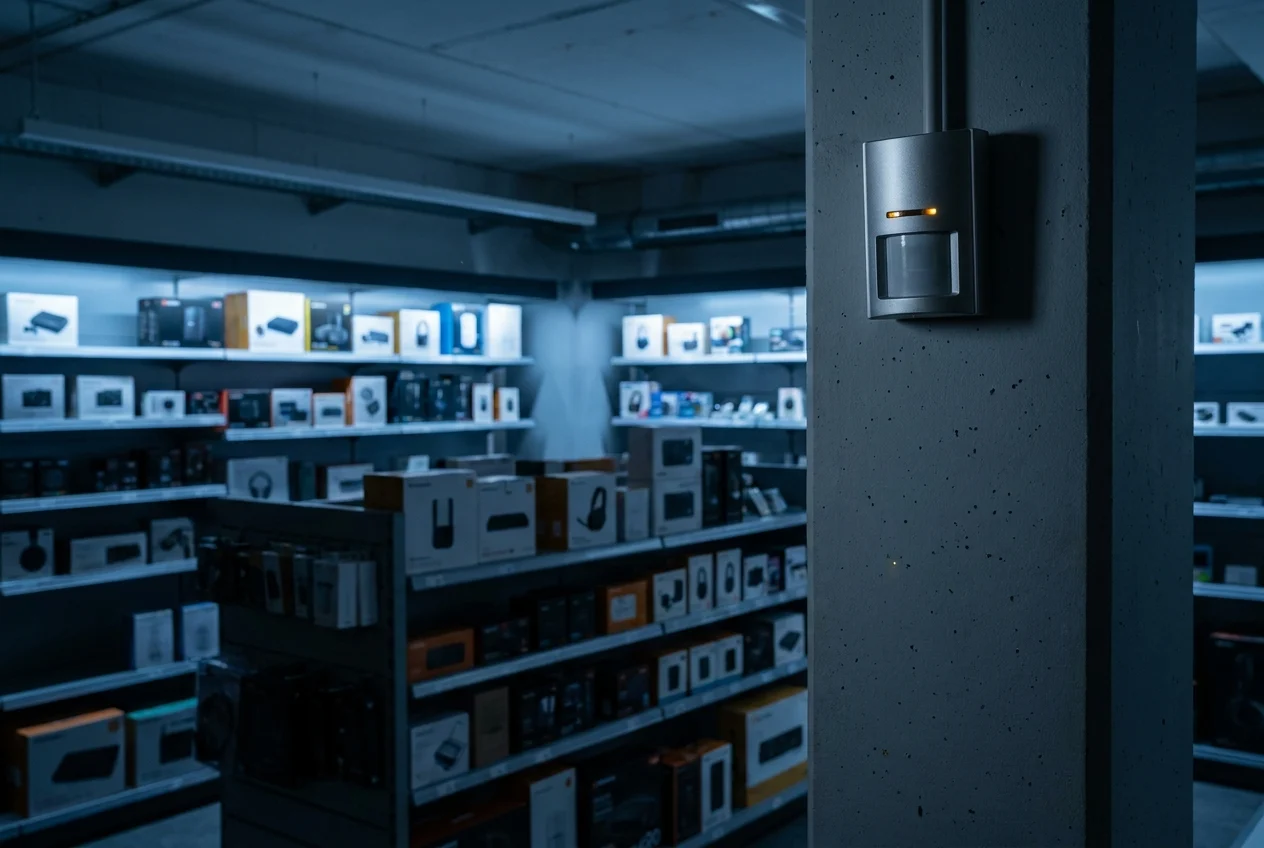
After-hours retail & small offices
A shop floor, stockroom or office that goes live the moment the last person leaves and stands down at opening. Scheduled arm / disarm plus a tamper switch is the intrusion coverage a small-business owner signs off on.
Scheduled arm/disarm + tamper flag, from the 500-pc floor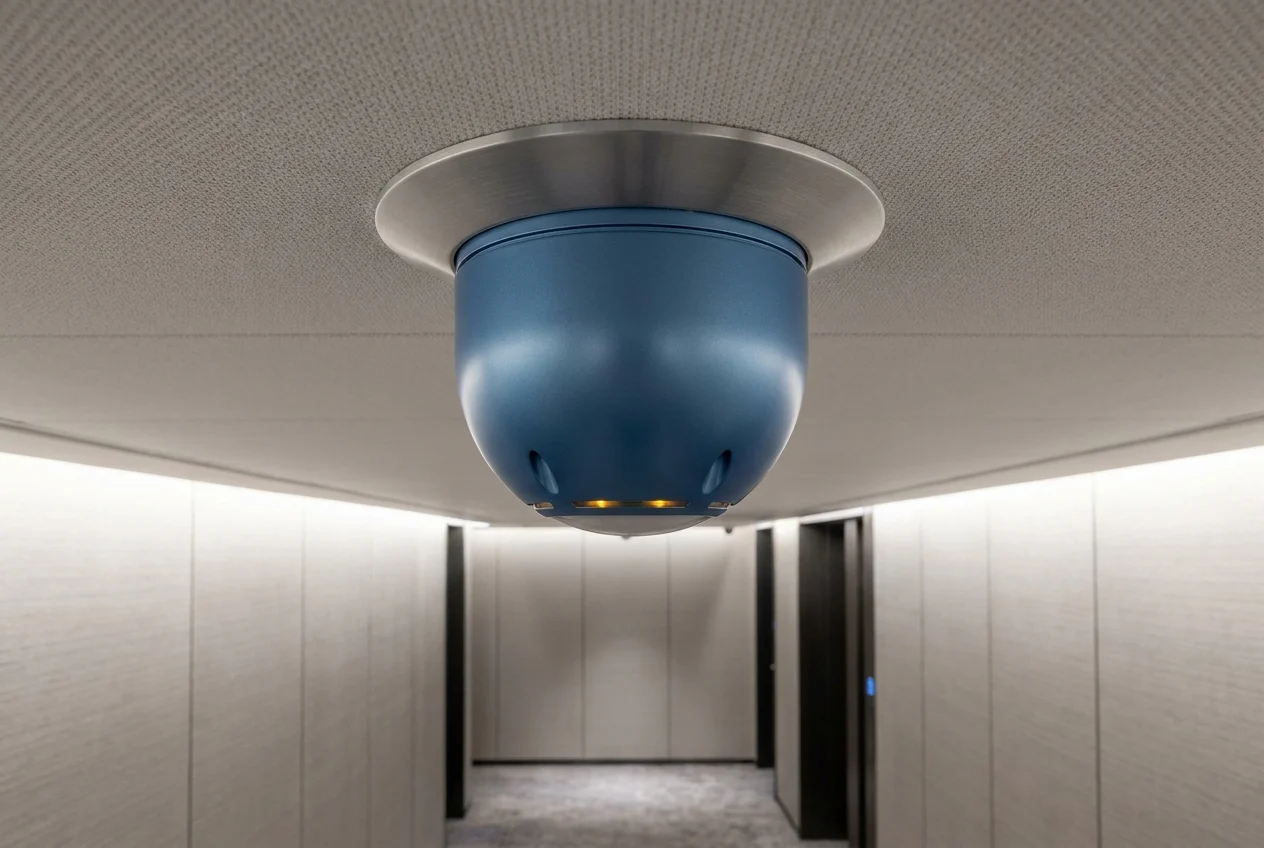
Hotels & serviced apartments
Corridors, lobbies and repeated per-room coverage across many identical rooms, armed on checkout. The ceiling 360° body on a Zigbee mesh scales floor by floor, and the OEM app skin runs the whole property's motion feed under one name.
Ceiling 360° on Zigbee mesh + OEM app skin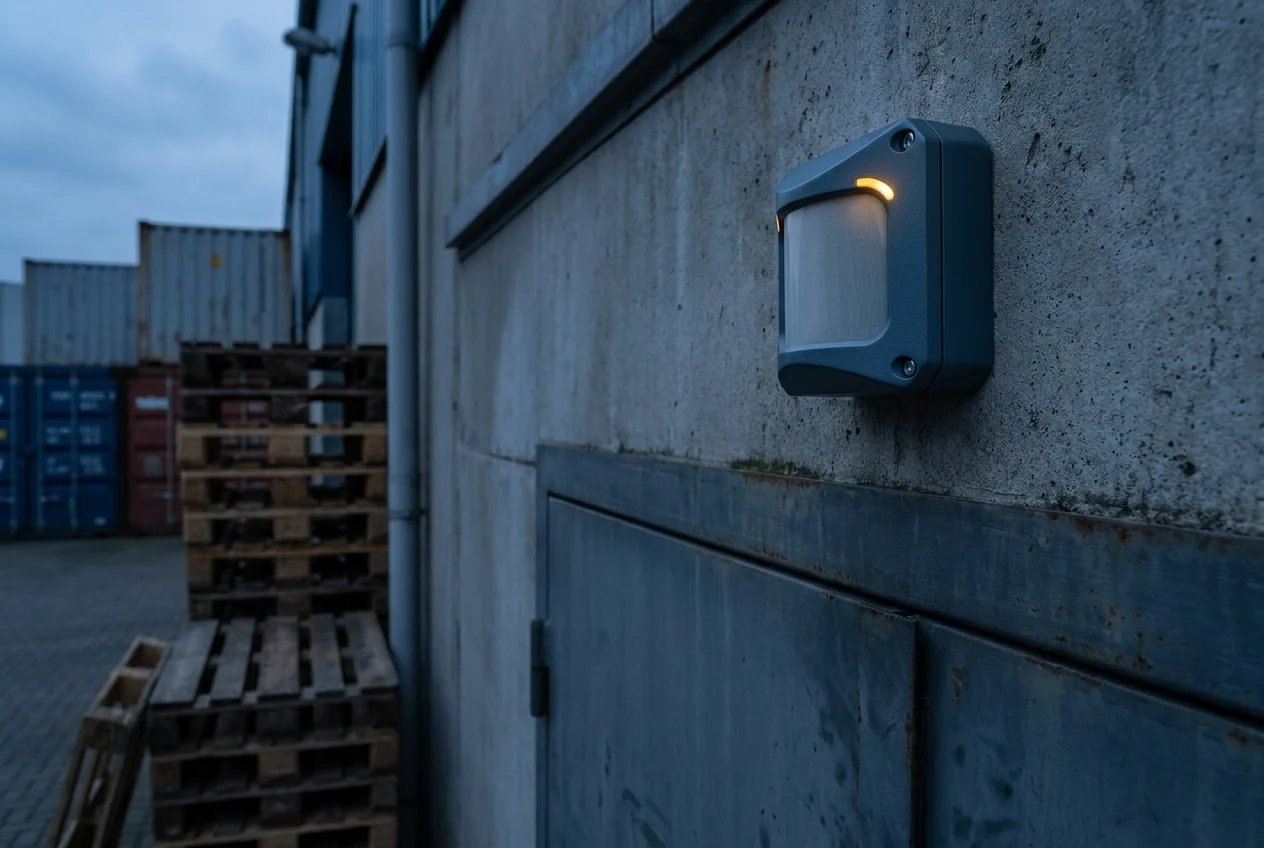
Warehouses, yards & covered entries
Wide open floors and exterior approaches a single wall cone cannot hold. The ceiling 360° watches the floor while the outdoor IP65 variant reaches ~12 m down a drive and reports into an existing 433 MHz panel.
Ceiling + outdoor IP65 + QC records for procurementResellers moving single units and starter kits, security installers and their supplying resellers, hotel operators and warehouse / facility procurement all pull a different body — the full 14-category catalog is on the home page.
Tell Us the Rooms You Are Covering
Give us the coverage and the radio, and a matched quote returns within one working day. A functional sample follows in 7–15 days, charged at cost and taken back off the bulk invoice once production is placed, so the unit is walk-tested on your own floor before the main order is committed.
Adding contact or leak points to the same order? The door & window sensor and water-leak detector pages cover those.